
Interior Detail Only
Deep cabin cleaning for carpets, seats, vents, leather, glass, pet hair, odors, and high-touch surfaces — handled at your location.
Interior Detail Only
Looking for a car detail close to me that actually cleans the interior instead of just making it smell like artificial pine? Drippy Suds is a mobile interior detailing service that comes to your home, office, or apartment lot — no shop visit, no drop-off, no waiting room. Owner Harvey built this service around one idea: the inside of your car should be genuinely clean, not visually passable.
What Is Interior Car Detailing? (And Why It's Not a Car Wash)
An interior car detail and a car wash interior wipe-down are not the same service. At a tunnel wash or quick-lube add-on, someone runs a vacuum over the floor mats, wipes the dashboard with a generic cloth, and calls it done. That removes the visible layer — and nothing underneath it.
A real interior detail is a methodical, surface-by-surface cleaning of every material in the cabin. Leather, vinyl, cloth, hard plastic, glass, carpet, and rubber all need different products and techniques. Use the wrong product on a leather seat and you dry out the hide. Use a generic all-purpose cleaner on a touchscreen and you haze the oleophobic coating. Use too much moisture on cloth upholstery and you trap mildew that smells worse a week later than the original problem.
Interior detailing also reaches the surfaces that standard cleaning skips entirely: the seat tracks, the gap between the console and the seat, the inside of door pockets, the HVAC vents, the seatbelt webbing, and the underside of the dashboard. These are the places bacteria, allergens, and odor sources accumulate without ever being visible. Getting those areas clean is the difference between a car that looks clean and one that is clean.
We come to your home, workplace, apartment lot, or wherever the vehicle is parked, so your car gets handled without rearranging your day.
Book NowEverything Included in a Professional Interior Detail
Here is exactly what a Drippy Suds interior detail covers — not a marketing checklist, but a real breakdown of every step:
Full debris removal: Floor mats pulled, everything removed from the cabin, seats moved through their full track range so the areas underneath are actually accessible.
Deep vacuum: Carpets, upholstered seats, seams and stitching gaps, storage pockets, seat tracks, trunk liner, and every crevice where crumbs and pet hair settle.
Vent cleaning: HVAC vents get blown out and brushed. Dust that collects inside the vent housing circulates through the air every time you run the fan — most people never touch it.
High-touch surface disinfection: Steering wheel, gear shifter, door handles, window switches, start button, seat adjustment controls, and seatbelt buckles. These surfaces get touched hundreds of times a week and rarely cleaned.
Dashboard and trim: Cleaned with products appropriate to the material — not a single all-purpose spray across everything. Screens cleaned without hazing the coating. Plastics finished with a low-sheen, non-greasy protectant.
Carpet and upholstery treatment: Light soiling and heavy staining get different approaches. Extraction is used where moisture is needed so the carpet dries properly instead of trapping odor.
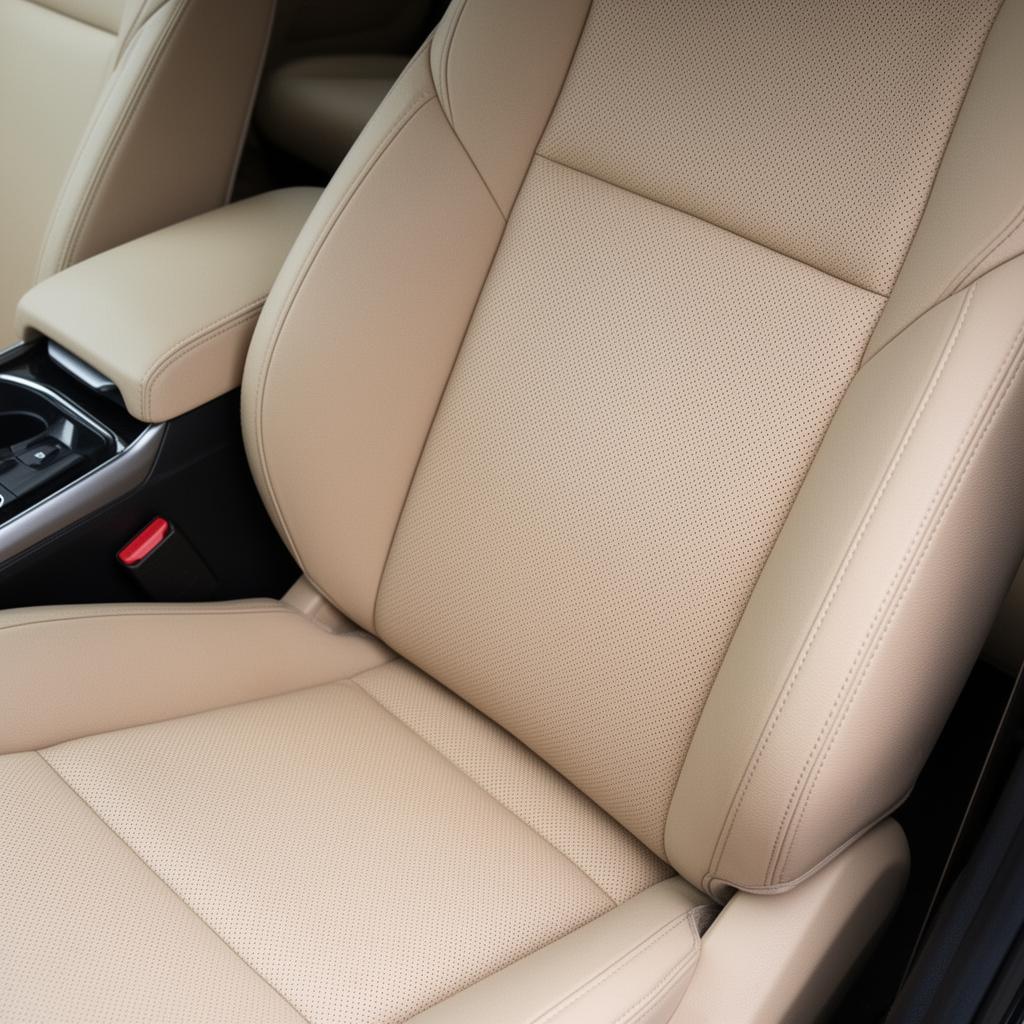
Leather cleaning and conditioning: Cleaned to remove surface soil and body oils, then conditioned to keep the hide supple. This is cleaning and conditioning only — not reconditioning, dye repair, or crack filling.
Cupholders and storage: Pulled and scrubbed, not swiped at. The stickiness at the bottom of cupholders is one of the most consistent things people notice immediately after a detail.
Door jambs: Wiped down on every door. A clean cabin feels unfinished the moment you open a grimy door jamb.
Interior glass: All windows and mirrors cleaned from the inside for streak-free visibility. Interior glass fogging and haze comes from off-gassing vinyl and fingerprints — it's a different problem than exterior glass and needs to be addressed separately.
Inside the service
Our Interior Detailing Process — Surface by Surface
The order of operations in a professional interior detail matters. Start in the wrong place and you're cleaning a surface twice. Here is how a Drippy Suds appointment actually runs:
Step 1 — Clear and stage. Everything out of the vehicle. Floor mats out and set aside for separate cleaning. Seats moved forward and back to expose the full carpet underneath.
Step 2 — Dry extraction first. The full interior gets vacuumed before any product touches any surface. Applying product to a surface still covered in loose debris embeds the debris. Vacuum the headliner, vents, seats, carpets, console, and door panels before anything gets wet.
Step 3 — Treat carpet and upholstery. Based on the condition of the material, the appropriate cleaner or extractor is applied. Agitation loosens embedded soil. For pet hair, specialized tools are used before extraction — the vacuum alone will not pull hair that has worked into the fiber weave.
Step 4 — Clean hard surfaces top to bottom. Dashboard first, then center console, then door panels, then sills. Gravity works against you if you go bottom to top — product drips from the dashboard onto a door panel you already cleaned.
Step 5 — Detail high-touch surfaces. Steering wheel, shifter, all buttons and controls, seatbelt hardware. These get cleaned and disinfected separately because the soil load and bacteria count on these surfaces is significantly higher than surrounding surfaces.
Step 6 — Leather care. If the vehicle has leather or leatherette seating, those surfaces get a dedicated cleaning pass to remove body oils and surface soil, followed by a conditioner application. This keeps the leather from drying, cracking, and fading prematurely.
Step 7 — Glass. Interior glass last, because cleaning the rest of the cabin generates dust and vapor that settles on the glass. Interior windows are cleaned with a dedicated glass product using a folded applicator to reach the corners properly.
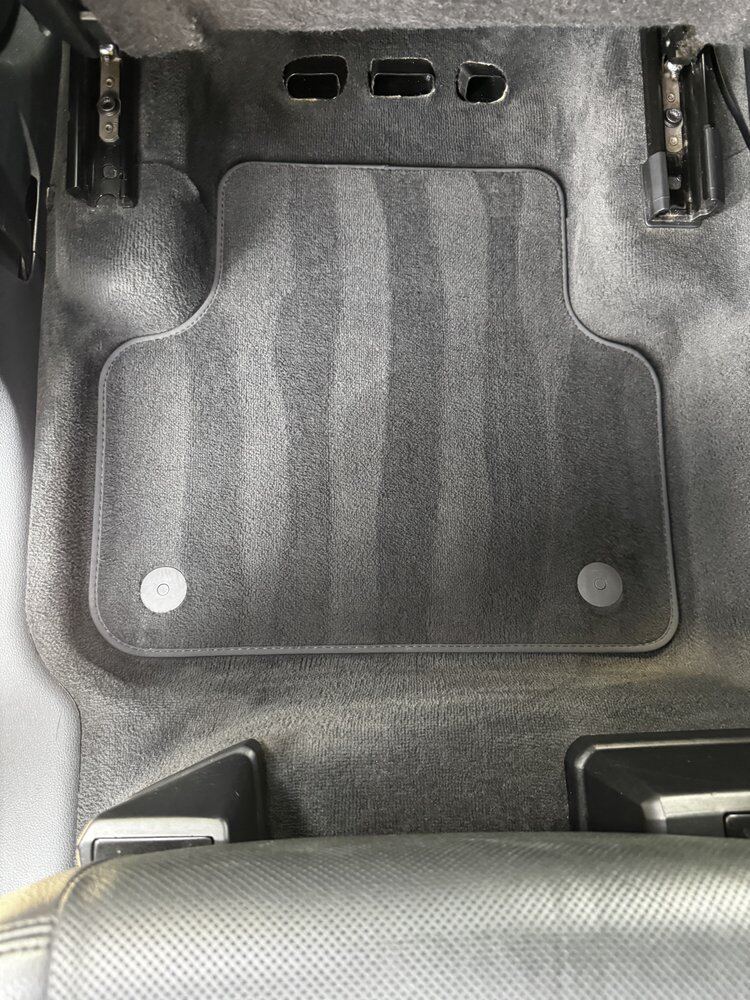
Step 8 — Floor mats. Cleaned separately, allowed to dry, returned to the vehicle. Reinstalling wet mats is how carpet mold starts.
Step 9 — Final inspection. Walk through every surface, every vent, every seam. Harvey does a final check before considering any appointment complete.
Interior Detailing Pricing: What Factors Affect Your Cost
There is no single price for interior detailing because two cars sitting next to each other in the same parking lot can represent completely different scopes of work. Quoting a flat number before seeing a vehicle is how detailers create disappointed customers — either because the price was too low and corners got cut, or because the customer expected more and got less.
The factors that actually drive the cost of an interior detail up or down:
Vehicle size. A two-door coupe and a three-row SUV are not the same job. Surface area, seat count, and carpet coverage all scale with vehicle size. Larger vehicles cost more because they take longer.
Current condition. A vehicle that gets detailed every four months takes much less work than one that hasn't been touched in two years. Heavy staining, embedded pet hair, food residue in seat seams, and dried spills all add time and product cost.
Pet hair volume. Dog and cat hair that has worked into cloth upholstery and carpet requires specialized extraction tools and multiple passes. Heavy pet hair jobs add meaningful time to an appointment.
Odor source and severity. Odors that come from surface soil — food, general use — are typically resolved by the standard cleaning process. Smoke odor embedded in the headliner and carpet, or deep pet odor in the foam beneath the upholstery, may require an additional ozone or enzyme treatment. That is a separate service with a separate cost, and Drippy Suds will tell you that upfront if the vehicle needs it.
Seat material. Leather seating adds a conditioning step that cloth interiors don't require. Vehicles with both leather and cloth (common in mid-tier trims) need both treatments applied correctly.
To get an accurate number, contact Drippy Suds directly at 916-507-4802. Harvey will ask the right questions and give you a straight answer.
Why Your Car's Interior Is Dirtier Than You Think
The Queen Mary University study mentioned earlier isn't an outlier.
Multiple independent studies have tested car interiors for bacterial load, and the results consistently show that steering wheels, gear shifters, and seatbelt hardware test worse than household toilet seats — not because cars are inherently dirtier, but because people clean their bathroom and don't clean their car.
The specific problem areas:
Steering wheel and shifter. Your hands touch these surfaces every time you drive. The same hands that touched a gas pump, a shopping cart, a door handle, and a phone. Bacteria from every one of those surfaces transfers directly to your steering wheel. The textured grip material on most modern steering wheels is an ideal surface for bacterial adhesion.
HVAC vents. Dust, pollen, mold spores, and pet dander settle into the vent housing and get redistributed through the cabin air every time the fan runs. For allergy sufferers, this is a meaningful exposure source. Regular vent cleaning as part of an interior detail reduces this substantially.
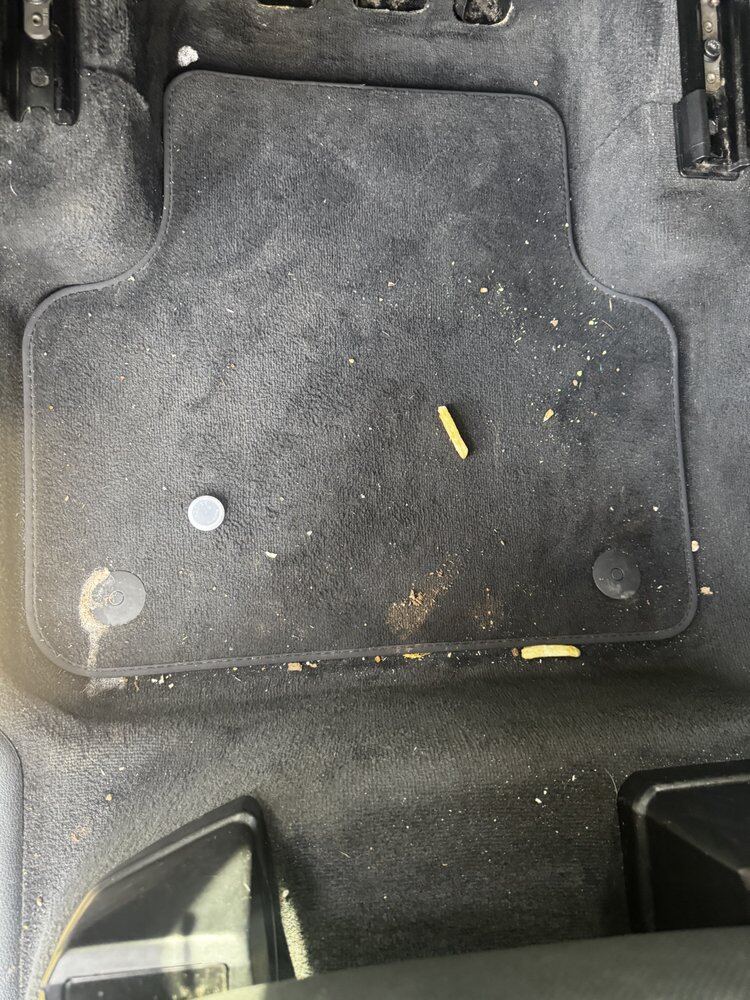
Carpet and floor mats. Your shoes track in everything from outside — pathogens, pesticides, tire rubber particulate, general contaminants. If you have kids who drop food on the floor and then pick it up, the floor is a real hygiene concern.
Child car seats. A 2017 study found that infant car seats carry some of the highest bacterial loads of any surface tested in family vehicles — higher than the steering wheel. Food residue in the harness webbing and padding creates an environment where bacteria thrive. Professional interior detailing treats the seat materials and surrounding upholstery safely, without leaving product residue that could contact a child's skin.
Headliner. Breath moisture, hairspray, and general off-gassing from the cabin settle on the headliner over time. It's one of the most commonly neglected surfaces in a DIY clean — and one of the first things a professional detailer addresses.
How to Prepare Your Car for an Interior Detail Appointment
You don't need to do much — that's the point of booking a detail service. But a few things make the appointment go faster and produce better results:
Remove personal items. Take out anything you want to keep: charging cables, sunglasses, registration documents, change in the cupholder, items in the door pockets. The detailer needs clear access to every surface, and personal items left in the car slow the process.
Take out child car seats if possible. This allows the seat and the upholstery beneath it to be cleaned properly. A car seat reinstalled on uncleaned upholstery is a missed opportunity.
Note specific problem areas. If there's a stain in a specific spot, a smell you can't locate, or a surface you're concerned about — mention it when you book. That context helps the detailer allocate time to the right areas instead of discovering problems mid-appointment.
Make sure the car is accessible. For mobile appointments, make sure there's access to the vehicle at the scheduled time. Drippy Suds brings everything needed — water, power, equipment, and products. You don't need to provide anything.
Keep pets and kids clear during the appointment. Products used during a detail need time to fully dry and off-gas before re-exposure. Most appointments run 90 minutes to two hours — plan accordingly.
Honest answer
Mobile SUV Detailing and Interior Detailing for Trucks and Large Vehicles
A three-row SUV is not a scaled-up sedan. It is a fundamentally bigger interior job, and pretending otherwise is how a vehicle comes back half-cleaned. When people search for mobile SUV detailing across the Sacramento metro, what they actually need is someone who treats the third row, the cargo well, and the extra carpet square footage with the same attention the front cabin gets. Drippy Suds details SUVs, trucks, minivans, and three-row family haulers the same surface-by-surface way as anything else. There is just more of it.
Here is what changes when the vehicle gets bigger:
Third-row vacuum and extraction. Third-row seats are where crumbs, pet hair, and forgotten snacks collect because nobody sits back there to notice. Those seats get pulled through their full track range, vacuumed into the seam gaps, and extracted where the upholstery needs moisture. On vehicles where the third row folds flat into the floor, the well underneath the folded seats is one of the dirtiest spots in the whole cabin, and one of the most commonly skipped.
Cargo-area cleaning. The cargo area behind the last row carries groceries, sports gear, dog crates, mulch bags, and everything else a large vehicle gets used for. The cargo carpet and liner get vacuumed and treated the same as the passenger floor. Removable cargo trays and mats are pulled and cleaned separately, allowed to dry, and returned dry, not reinstalled wet.
More upholstery surface area. A three-row SUV can carry close to twice the seating and carpet of a coupe. Every additional seat is another set of seams, another stitching line, another track to clean under. That surface area is the single biggest reason larger vehicles take longer.
Why SUVs and trucks take longer and cost more. There is no flat SUV price, for the same reason there is no flat sedan price: condition, pet hair, and seat material all still apply. But size is the multiplier on top of all of it. A clean two-row crossover is closer to a sedan in time. A three-row SUV that hauls kids and a dog and hasn't been touched in a year is the longest interior job on the menu. Larger vehicles cost more because they genuinely take more time and product, not because of an upcharge, and Drippy Suds quotes that honestly after the right questions instead of guessing high.
The cadence guidance scales the same way. Families running an SUV or minivan with young kids and a dog should plan on an interior detail roughly every three months. The larger the cabin and the heavier the use, the faster mess works into the extra carpet and seat foam, and the more it costs to reverse once it sets. For a straight answer on your specific vehicle, call 916-507-4802 and Harvey will walk through it with you.
Why Drippy Suds for Interior Car Detailing
There are a lot of options when you search for vehicle detailing near me or auto detail service in Sacramento. The difference with Drippy Suds is specificity and honesty.
Owner Harvey runs every detail personally — this isn't a franchise or a multi-van operation where you don't know who's showing up. Harvey built Drippy Suds around the kind of detail work that treats your vehicle like it matters, because it does. The car you drive every day is your second largest asset in most cases, and the interior is what you live in.
The service is mobile and runs Monday through Friday, 8am to 5pm, across Sacramento, Elk Grove, Folsom, Roseville, and the surrounding areas. If you're inside the greater Sacramento metro, we can get to your address — your home, your office, your apartment complex's parking lot. No shop drop-off required.
If the inside of your car has been bothering you, it's time. Call 916-507-4802 or book online. Harvey will come to you.
Frequently Asked Questions
- How Often Should You Get Interior Car Detailing?
- The honest answer depends on how you use your car. Every three months: Families with young kids, dog owners, rideshare and delivery drivers, people who eat meals in the car regularly. High-use interiors accumulate bacteria, allergens, and odor sources fast. Quarterly detailing prevents deep-set stains and keeps the cabin genuinely sanitary rather than just visually acceptable. Every four to six months: Most standard Sacramento-area commuters. A single driver using the car for commuting, errands, and occasional trips can maintain a clean interior on a twice-a-year schedule without the cabin becoming a problem. Twice a year: Low-mileage or second vehicles, mostly solo drivers with clean habits. If the car sits in a garage most of the time and sees minimal food or pet contact, two appointments per year is a reasonable maintenance interval. Immediately, regardless of schedule: After a significant spill, after a road trip with kids or pets, before listing a vehicle for sale or trade-in, or any time the interior has started to smell and you can't identify the source. The trade-in angle is worth taking seriously. A vehicle with a genuinely clean interior — no odors, no staining, no matted carpet — consistently comes back with higher dealer appraisals and stronger private-party offers than an identical vehicle with a neglected interior. A few hundred dollars in regular detailing over several years can return multiples at the point of sale.
- Interior Detail vs. Full Detail — Which Service Do You Actually Need?
- The short version: book Interior Detail Only when the outside can wait but the inside can't. Book the Drippy Diamond Package when both the interior and exterior need attention at the same time. More specifically: Book Interior Detail Only when: You have a spill, a pet hair problem, or a smell you can't get rid of. You're recovering from a road trip. Your cabin has hit the point where it stops feeling comfortable. You want to detail your car but the paint is reasonably clean and doesn't need work. Book the Drippy Diamond Package when: The interior needs attention and the exterior also has road film, tree sap, bug splatter, or accumulated grime that a rinse won't address. The full package handles both at once for less than booking them as two separate appointments. What Interior Detail Only does not include: Exterior wash, paint decontamination, wax, sealant, or ceramic coating. It also does not include leather reconditioning, dye repair, or crack filling — the service covers cleaning and conditioning existing leather, not repairing damaged hide. If the interior has deep smoke odor or significant pet odor embedded in the foam, those conditions may require additional ozone or enzyme treatment beyond the standard service — and Drippy Suds will be honest with you about that before you book.
- Does Interior Detailing Remove Pet Hair and Smells?
- Pet hair is one of the most common reasons people book an interior detail in Elk Grove and across the Sacramento metro. Dog and cat hair works into cloth upholstery and carpet in a way that a household vacuum cannot reverse — the fibers grip the hair and hold onto it. Getting it out takes the right tools, extraction technique, and time. The difference between a home vacuum attempt and a professional pet hair removal is not subtle. Odors are resolved by removing the source — not covering it with fragrance. Air fresheners and spray deodorizers mask odors for a day or two until the source reasserts itself. Professional interior detailing removes what's actually producing the smell: the spill that soaked into the carpet padding, the pet dander embedded in the seat foam, the mold that started in a floor mat seam. Once the source is gone, the smell is gone. Deep smoke odor or heavy pet odor that has penetrated the headliner, seat foam, and carpet backing may need additional treatment beyond the standard interior detail — specifically ozone treatment or enzyme application. Drippy Suds does not claim that a standard interior detail permanently eliminates all odors in every vehicle. If your vehicle needs that additional treatment, Harvey will tell you before you pay for something that won't fully solve the problem.
- Does interior detailing get pet hair out?
- Yes, and this is one of the biggest reasons dog owners book the service. Pet hair works itself into cloth and carpet in a way that a home vacuum genuinely cannot pull out — the fibers grip the hair and hold onto it. Getting it out takes the right tools, extraction, and time. It's one of those jobs where the difference between a home vacuum attempt and a professional interior detail is not subtle. You'll see the hair pulled out that you didn't know was still there.
- Does interior detailing remove smells?
- Most of the time, yes — and more importantly, it removes them the right way. Air fresheners and sprays don't remove odors, they just cover them for a day or two until the source comes back. A real interior detail removes the source: the milk that spilled under the seat three weeks ago, the gym bag that lived in the back, the dog that got caught in the rain. Once the source is gone, the smell is gone. If a smoke or pet odor is deeply embedded, that may need an additional ozone or enzyme treatment beyond a standard detail, and we'll tell you that honestly when we see the vehicle.
- How long does an interior detail take?
- Most interior-only appointments run around ninety minutes to two hours depending on the size of the vehicle and what we're working with. A clean-ish commuter sedan sits at one end. A family SUV with three kids, a dog, and a few months of accumulation sits at the other. The service is mobile, so we handle it at your home, your office, your apartment lot, or wherever the car is parked. You don't lose your afternoon.
- How often should I get an interior car detail?
- Most Sacramento-area drivers should book an interior detail every four to six months to keep the cabin genuinely clean. Families with kids, dog owners, rideshare drivers, and people who eat in the car regularly should shorten that to every three months. Single-driver commuters with clean habits can stretch to twice a year. The wrong move is waiting until it looks bad — by then odors and bacteria are embedded in materials that take more work to reverse.
- Does interior detailing remove pet hair?
- Yes — and this is one of the most common reasons people book the service. Dog and cat hair works into cloth upholstery and carpet fibers in a way that a household vacuum can't fully extract. Professional interior detailing uses specialized tools and extraction techniques to pull embedded hair out. The difference between a home vacuum and a professional pet hair removal is not subtle — you'll see the result immediately.
- Does interior detailing remove odors?
- Most of the time, yes — because detailing removes the odor source rather than covering it with fragrance. Food residue, pet dander, and mildew from wet mats all produce odors that disappear once the source is cleaned out. Deep smoke odor or severe pet odor embedded in the seat foam and headliner may need additional ozone or enzyme treatment beyond the standard service. Drippy Suds will tell you upfront if that applies to your vehicle.
- Is interior detailing safe for leather seats?
- Yes, when done correctly. Drippy Suds uses leather-specific cleaners and conditioners — not generic all-purpose sprays that can dry out and crack leather over time. The service covers cleaning surface soil and body oils from the leather, followed by a conditioner application that keeps the hide supple. This is cleaning and conditioning only — not reconditioning, dye repair, or crack filling. If your leather has significant damage, that requires a specialist.
- What is the difference between interior detailing and a car wash?
- A car wash interior option typically means a quick vacuum of the floor mats and a wipe of the dashboard — maybe two or three minutes of actual attention. An interior detail is a methodical surface-by-surface cleaning of every material in the cabin, using the right product for each material, reaching the surfaces a basic wipe-down never touches: seat tracks, HVAC vents, seatbelt hardware, door jambs, and the seam gaps where bacteria accumulate. The two services are not comparable in scope or result.
- Will interior detailing improve my car's resale or trade-in value?
- Yes, meaningfully. Dealers and private buyers both respond to interior condition — odors, staining, and worn upholstery all reduce perceived value before they even look at the mechanical history. Regular interior detailing prevents deep-set stains and odors from becoming permanent, and a professionally cleaned interior at the point of sale consistently produces better appraisals. For most vehicles, the cost of consistent detailing over the ownership period returns multiples at trade-in.
- Do I need to do anything to prepare my car for an interior detail?
- Remove personal items — cables, documents, change, anything you want to keep. Take out child car seats if possible so the underlying upholstery can be cleaned properly. If there's a specific stain or odor area you're concerned about, mention it when you book so the detailer can allocate time to it. Drippy Suds brings all equipment, water, power, and products to your location — you don't need to supply anything.
- How is Drippy Suds different from other car detailers near me?
- Owner Harvey works every detail personally — this isn't a franchise where a different technician shows up each time. The service is mobile, running Monday through Friday across Sacramento, Elk Grove, Folsom, Roseville, and surrounding areas. Drippy Suds uses material-appropriate products, documents the process surface by surface, and won't claim to fix problems the standard service can't resolve — if your vehicle needs additional treatment for deep odors, you'll hear that before you book.
- Does interior detailing include the trunk or cargo area?
- The cargo area and trunk liner are part of the service. Floor mats from the cargo area are pulled and cleaned separately. The trunk carpet and liner get vacuumed and treated the same way as the passenger cabin floor. If the cargo area has a removable tray or cargo mat, that gets cleaned independently before being returned.
- Do you do mobile SUV detailing and detail larger vehicles like trucks and minivans?
- Yes. Drippy Suds details SUVs, trucks, minivans, and three-row vehicles the same surface-by-surface way as anything else, and the whole thing happens at your location. A larger cabin means more seats, more carpet, and more seams to clean, plus the third row and cargo area that smaller vehicles don't have. Because there is more surface area, larger vehicles take longer and cost more than a sedan, but that is time and product, not an upcharge. Call 916-507-4802 and Harvey will give you a straight number for your specific vehicle.
- How does interior cleaning work on a three-row SUV?
- The third row gets the same treatment as the front seats: pulled through its full track range, vacuumed into the seams and stitching, and extracted where the upholstery needs it. On vehicles where the third row folds flat, the well underneath those folded seats gets cleaned too, since it is one of the dirtiest and most commonly skipped spots in a large vehicle. The cargo area behind the last row, including any removable tray or mat, is vacuumed and treated as part of the standard service. The extra seating and carpet are the main reason a three-row SUV takes longer than a smaller vehicle.
We Also Serve
Related Services
Call 916-507-4802 or book online — Harvey comes to you.
Book Now