
Ceramic Coating vs. Wax: What Sacramento Drivers Should Actually Choose
Ceramic coating is the most oversold service in detailing.
Ceramic coating is the most oversold service in the detailing industry, and "ceramic coating vs. wax" is the question we get asked more than any other. So let's skip the sales pitch. Both products protect your paint. They protect it in completely different ways, for completely different lengths of time, at completely different prices. The right answer depends on how you drive, where your car sits all day, and how much hands-on maintenance you actually enjoy. We're detailers, not a wax salesman, so we'll tell you when wax is the smarter buy and when it's a waste of your money.
Here in the Sacramento metro, this choice matters more than it does in a mild coastal market. Our paint gets cooked. Triple-digit summers, Central Valley UV in the "very high" to "extreme" range, valley oak pollen, tree sap, hard water, and fire-season ash all attack a clear coat from different angles. The protection question isn't academic here. It's the difference between a finish that still looks deep at year three and one that's gone chalky and flat.
Ceramic Coating vs. Wax: The Honest Difference
Wax and ceramic coating sit on opposite ends of the protection spectrum, and almost everything about them differs.
Carnauba wax is a natural product that sits on top of your clear coat. It fills tiny surface imperfections optically and lays down a warm, organic depth of gloss that a lot of enthusiasts genuinely love. It is cheap, it applies in an afternoon, and it asks for nothing more than a microfiber towel. What it does not do is last, and it offers only minimal UV and chemical resistance.
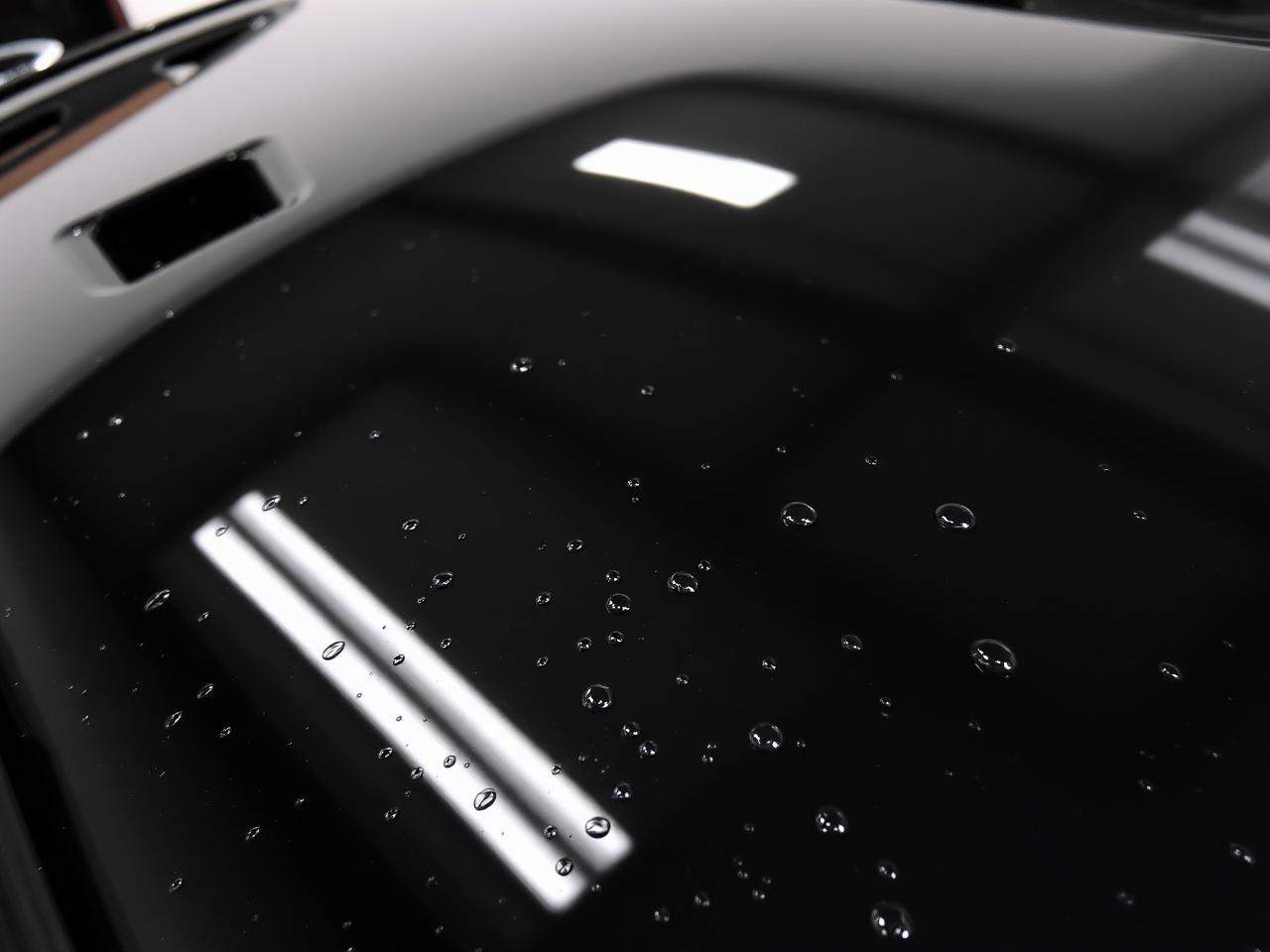
A ceramic coating is a liquid polymer, usually silica dioxide based, that chemically bonds to the clear coat at a molecular level. Once it cures, it isn't washed off by rain or soap the way wax is. It delivers four things wax can't match at the same level: hydrophobic water behavior, real UV resistance, chemical resistance against acidic contaminants, and a glassy depth of gloss. It also costs more, requires proper paint prep, and needs professional application and a controlled cure to actually perform.
The trade-off is simple to state. Wax is cheap, easy, and short-lived. Ceramic is an investment that's harder to apply but pays off over years. Neither one is a scam, and neither one is magic.
What neither product does
This is where most of the overselling happens, so we'll be blunt. Ceramic coating does not prevent rock chips. It does not prevent scratches from a careless wash or an automatic tunnel brush. It does not make your car self-cleaning, and it does not mean you'll never wash it again. Wax doesn't do any of those things either. Anyone telling you a coating is "scratch-proof," "permanent," or "bulletproof" is selling you a fantasy. A coating makes washing easier and slows UV damage. That's the real value, and in Sacramento it's a meaningful one.
How Long Does Ceramic Coating Last vs. Wax?
Durability is the single biggest gap between these two products, and it's where the Sacramento climate tilts the math hard.
Wax lasts roughly six to eight weeks in normal use, and often less in our summers. When hood surface temperatures push past 160 degrees on a dark car, wax breaks down fast. Protection you laid down in April is frequently gone by July. If you wax your own car, you're realistically doing it five or six times a year to stay ahead of the heat.
A paint sealant, the synthetic middle ground, stretches that to roughly four to six months with better UV and chemical resistance than wax. It's a reasonable compromise for drivers who want more than wax without committing to a coating, and we can add a spray sealant to an exterior wash as an upgrade.
A ceramic coating lasts years, not weeks. The honest range is two to five years, depending on the product tier, the quality of the prep and application, and how the car is maintained. A coating applied over contaminated or unpolished paint won't hit the top of that range no matter what the bottle promises, which is exactly why prep work is the part that actually determines your result. If you'd rather hand the whole thing off, here's our professional ceramic coating in Sacramento and what the process really involves. Or just call (916) 539-2062 and we'll tell you straight whether your paint is even a candidate.
Ceramic Coating vs. Wax in Sacramento's Climate
The Sacramento metro averages over 260 sunny days a year, and the summer UV index regularly lands in the 9 to 11 range. UV is the primary driver of clear coat oxidation, the slow process that turns glossy paint chalky and faded. On dark colors, black and deep red especially, that fading shows up within two to three years on unprotected paint.
A coating's UV resistance is the single most relevant benefit for a Sacramento daily driver, more so than the water-beading party trick that gets all the attention in the marketing videos. Wax simply can't hold up to a Central Valley summer long enough to provide consistent UV protection. By the time the worst sun hits in July and August, a spring coat of wax has already cooked off. That's the core reason the climate case for ceramic is stronger here than in a foggy coastal town. If your car bakes in an uncovered driveway in Elk Grove or sits on a street in East Sac with afternoon sun, that gap compounds every summer. The same is true for the oak-lined lots and well-water sprinklers out east, which is why we put together a guide to ceramic coating for Fair Oaks drivers and the conditions their paint actually faces.
Is Ceramic Coating Worth It for Daily Drivers?
Short answer: often yes, but not always, and it depends on three honest questions.
- Where does the car sleep? A car garaged downtown sees a fraction of the UV that a car parked in an open driveway or a work lot does. The more sun exposure, the stronger the case for ceramic.
- How long are you keeping it? A coating's value comes from amortizing the cost across years. If you're trading the car in next spring, wax or a sealant makes more financial sense. If you're keeping it five years, the coating wins.
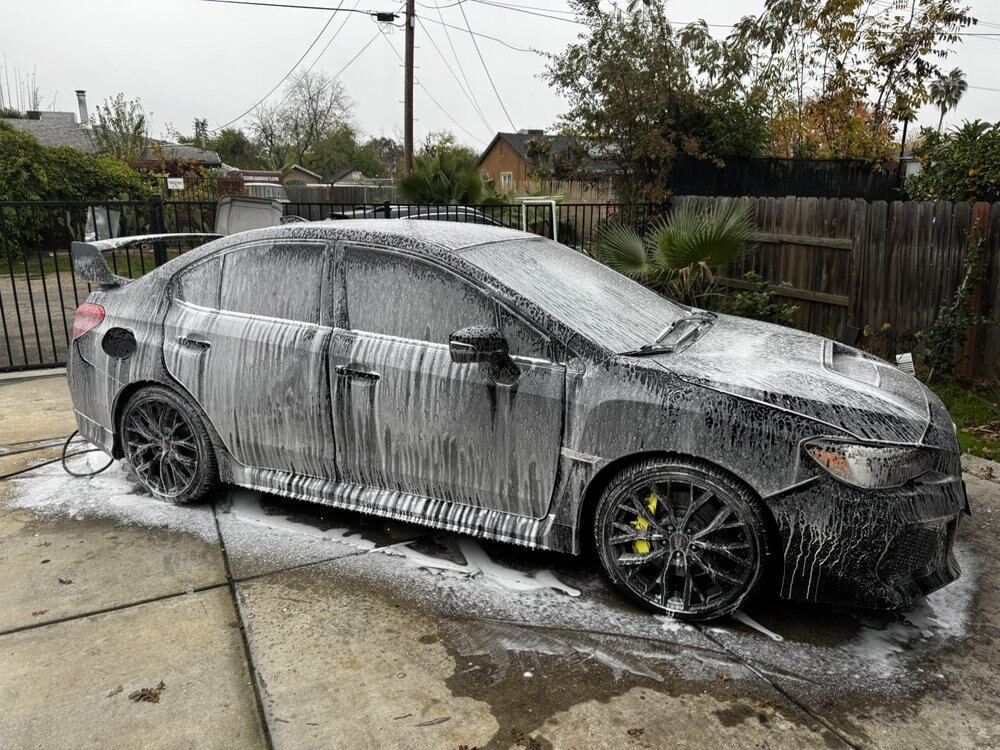
- How do you wash it? A coating gives its best return for someone who maintains it correctly with a contact-safe wash. If the car only ever goes through an automatic tunnel, you'll undo the benefit and scratch the coating anyway. Our hand wash and wax protection page explains why tunnel and touchless washes work against you.
For a lot of Sacramento daily drivers who keep their cars, park outside, and care about how the paint ages, ceramic is genuinely worth it. For someone leasing a car they garage and trade in three years, a couple of waxes a year is the honest, cheaper answer. We'd rather tell you that than sell you a coating you don't need. Tell us how you drive and we'll give you the recommendation that actually fits.
So Which One Should You Choose?
Pick wax if your budget is tight, you enjoy the ritual of doing it yourself, the car is garaged, or you're not keeping it long. Pick a sealant if you want a few months of hands-off protection without coating-level cost. Pick a ceramic coating if the car parks outside in our sun, you're keeping it for years, and you want to wash it less and watch it stay glossy longer.
Whatever you choose, the protection only performs if the paint underneath is clean and the work is done right. That's the part we obsess over.
Frequently Asked Questions
Is ceramic coating worth it for daily drivers?
For many Sacramento daily drivers, yes, particularly if the car parks outside and you plan to keep it several years. The UV resistance alone slows the fading our summers cause. But if you garage the car and trade it in every couple of years, the cost is harder to justify, and a quality sealant or regular wax is the more honest choice. The deciding factors are sun exposure, how long you're keeping the car, and whether you'll maintain it with a contact-safe wash.
What does ceramic coating cost compared to wax?
We don't quote flat numbers online because the price depends entirely on your vehicle's size, paint condition, and how much correction the surface needs before anything gets applied. The real comparison is this: wax is inexpensive but you're paying for it five or six times a year in our heat, plus your time. A ceramic coating is a larger one-time cost spread across two to five years of protection. For a long-term owner the math usually favors the coating; for a short-term owner it favors wax. Call (916) 539-2062 and we'll give you a straight number after we see the car. First-time clients get $25 off.
Does ceramic coating mean I never have to wash my car again?
No. A coating makes washing far easier and helps contamination release more readily, but the car still needs regular, contact-safe washing to perform and last. Skipping maintenance shortens a coating's life the same way it ruins wax. Any installer who tells you a coating is self-cleaning is overselling it.
Reach Drippy Suds Mobile Detailing at (916) 539-2062 or drippysudsllc@gmail.com to book. We're fully mobile across the greater Sacramento area, and every detail is backed by our satisfaction guarantee. If you're not completely satisfied, we'll make it right.
Not sure which one your car actually needs?
Tell us your vehicle, where you park, and how you drive. We'll give you a straight answer on whether wax, a sealant, or a ceramic coating is the honest fit. First-time clients get $25 off.
Rather just talk it through?
Call (916) 539-2062Topics